
When protecting your business investment, business alarms and security systems serve as your first line of defense against theft, vandalism, fire hazards, and unauthorized access. Modern commercial security has evolved far beyond simple door alarms to encompass integrated solutions that combine intrusion detection, fire safety, access control, and video surveillance into comprehensive protection platforms. Whether you operate a small retail shop, healthcare facility, or multi-story office building, implementing the right security infrastructure can prevent devastating losses while providing peace of mind for owners, employees, and customers.
Essential Components of Business Alarms and Security Systems
A comprehensive commercial security system integrates multiple protection layers working together seamlessly. Understanding each component helps business owners make informed decisions about their security investments.
Intrusion Detection Systems
Motion detectors form the backbone of most business alarm systems, using passive infrared (PIR) technology to detect heat signatures from moving objects. Modern commercial-grade detectors can distinguish between humans, animals, and environmental factors like air currents or swaying objects. Door and window sensors provide perimeter protection by triggering alerts when entry points are breached. Glass break detectors add another layer by identifying the specific frequency patterns of breaking glass.
Businesses with visible alarm and surveillance systems are generally considered less attractive targets for criminals, making security infrastructure an important component of a broader loss prevention strategy.
Fire Detection and Safety Systems
Commercial fire alarm systems go beyond residential smoke detectors to include heat sensors, carbon monoxide detection, and emergency communication systems. Addressable fire alarm panels can pinpoint the exact location of detected threats, enabling faster emergency response and evacuation procedures. Integration with sprinkler systems and emergency lighting creates a complete fire safety solution.
Access Control Systems
Modern access control moves beyond traditional lock-and-key security to provide granular control over who enters specific areas and when. Businesses looking to better manage employee, contractor, and visitor access often implement dedicated access control systems as part of a broader security strategy.
Video Surveillance: Your Digital Security Guard
Today’s commercial video surveillance systems leverage high-definition cameras, cloud storage, and artificial intelligence to provide 24/7 monitoring capabilities that far exceed what human security guards could accomplish. They can also integrate directly with alarm and access control platforms to create a unified security environment.
IP cameras offer superior image quality compared to analog systems, with many models providing 4K resolution that captures fine details like license plates or facial features. Night vision capabilities ensure round-the-clock protection, while weatherproof housings enable outdoor installation without performance degradation.
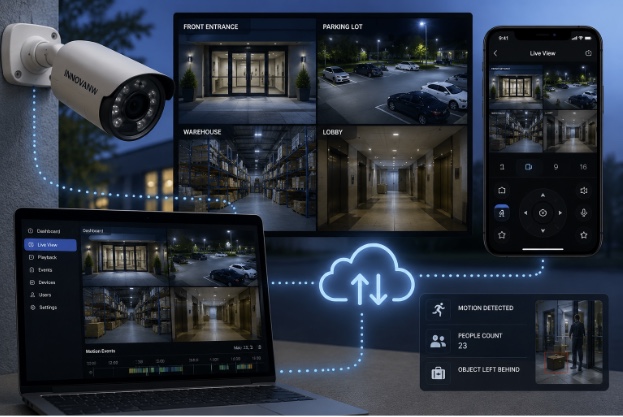
Cloud-based video management systems allow business owners to monitor their properties remotely through smartphone apps or web browsers. Motion-activated recording conserves storage space while ensuring all relevant activity is captured. Advanced analytics can detect unusual behavior patterns, count people entering specific areas, or identify when objects are left behind.
Strategic Camera Placement
Effective surveillance requires strategic camera positioning to eliminate blind spots while maximizing coverage. Key areas include:
- Entry and exit points – Capture clear facial images of everyone entering
- Cash registers and point-of-sale areas – Monitor transactions and prevent employee theft
- Inventory storage areas – Protect valuable merchandise and supplies
- Parking areas – Deter vehicle theft and vandalism
- Emergency exits – Ensure compliance with safety regulations
Professional Monitoring vs Self-Monitoring Options
Business owners must choose between professional monitoring services and self-monitoring solutions, each offering distinct advantages depending on business needs and budget considerations.
| Feature | Professional Monitoring | Self-Monitoring |
|---|---|---|
| Response Time | Immediate 24/7 response | Depends on owner availability |
| Emergency Dispatch | Automatic police/fire dispatch | Manual emergency calling required |
| Monthly Cost | $50–200 per month | $0–30 per month |
| False Alarm Management | Verification before dispatch | Owner verification required |
| Insurance Benefits | Significant premium discounts | Limited insurance benefits |
| Vacation/Travel | Continuous protection | Limited protection when away |
Professional monitoring services provide peace of mind for business owners who travel frequently or manage multiple locations. When alarms trigger, trained operators verify the threat and dispatch appropriate emergency services within minutes. Many insurance companies offer substantial premium discounts for businesses with professionally monitored security systems.
Professional monitoring services can help accelerate emergency response by ensuring alarms are reviewed and escalated immediately when potential threats are detected.
Integration with Smart Building Technology
Modern business alarms and security systems integrate seamlessly with smart building management platforms, creating efficiency gains that extend beyond security into energy management and operational optimization.
Automated lighting control can simulate occupancy when buildings are empty, deterring potential intruders while reducing energy costs. HVAC systems can adjust automatically when security systems detect after-hours occupancy, ensuring employee comfort while maintaining energy efficiency.
Smart locks enable temporary access for contractors or delivery personnel without compromising overall security. Business owners can grant time-limited access codes that automatically expire, eliminating the need to change locks or retrieve keys.
Mobile Management and Real-Time Alerts
Smartphone integration transforms business security from a passive monitoring system into an active management tool. Real-time push notifications alert owners to security events instantly, whether they’re across town or across the country.
Mobile apps provide comprehensive control over:
- Arm and disarm functions for different zones or the entire system
- Live video feeds from any connected camera
- Access control management for adding or removing user permissions
- System status monitoring including battery levels and connectivity
- Historical reporting for insurance claims or incident investigation
Industry-Specific Security Considerations
Different business sectors face unique security challenges requiring specialized approaches to protection and compliance.
Healthcare Facilities
Healthcare environments require HIPAA-compliant security systems that protect patient privacy while ensuring staff and visitor safety. Duress buttons provide immediate assistance for staff facing threatening situations, while access control systems restrict entry to sensitive areas containing medical records or pharmaceuticals.
Educational Institutions
Schools need comprehensive security solutions that balance open learning environments with student safety requirements. Weapons detection systems screen for potential threats at entrances, while lockdown capabilities enable rapid response to emergency situations.
Retail Environments
Retail businesses face unique challenges from shoplifting, employee theft, and after-hours break-ins. Point-of-sale integration with security cameras helps identify suspicious transactions, while electronic article surveillance (EAS) systems deter theft of high-value merchandise.
Cost Considerations and Return on Investment
Investing in comprehensive business security systems requires careful consideration of upfront costs versus long-term benefits and potential loss prevention.
Initial installation costs for complete commercial security systems typically range from $3,000 for small businesses to $50,000 or more for large facilities with multiple buildings. However, the return on investment often justifies these expenses through:
- Insurance premium reductions through professionally monitored security
- Theft prevention saving thousands in inventory losses annually
- Reduced liability from accidents or security incidents
- Employee productivity gains from improved safety and reduced security concerns
- Remote monitoring capabilities reducing need for on-site security personnel
Inventory shrinkage continues to cost retailers billions of dollars annually, making surveillance, access control, and alarm systems important components of broader loss prevention strategies.
Professional Installation and Ongoing Support
While some basic security components can be self-installed, comprehensive business alarms and security systems require professional design and installation to ensure optimal performance and code compliance.
Certified security technicians conduct thorough site assessments to identify vulnerabilities and recommend appropriate solutions. Professional installation ensures proper wiring, optimal camera placement, and integration between different system components.
Ongoing support services include:
- Regular system testing and maintenance to prevent failures
- Software updates for enhanced features and security patches
- 24/7 technical support for troubleshooting and emergency repairs
- System expansion as business needs evolve
- Training for staff members on proper system operation
Future Trends in Business Security Technology
The commercial security industry continues evolving rapidly, with emerging technologies promising even more sophisticated protection capabilities.
Artificial intelligence integration enables security systems to learn normal behavior patterns and identify anomalies that might indicate security threats. Facial recognition technology can identify known troublemakers or unauthorized individuals automatically.
Cloud computing provides unlimited storage for video recordings while enabling advanced analytics that would be impossible with traditional on-premise systems. Edge computing processes data locally for faster response times while reducing bandwidth requirements.
Integration with emergency services continues improving, with some systems now capable of automatically sharing live video feeds with responding police or fire departments during active incidents.
When selecting comprehensive business alarms and security systems for your commercial property, the most important consideration is choosing solutions that grow with your business while providing reliable protection for your most valuable assets. Professional security providers can design integrated systems that combine intrusion detection, fire safety, access control, and video surveillance into user-friendly platforms that enhance rather than complicate daily operations. Investing in proper security infrastructure protects not just physical assets but also employee safety, customer confidence, and business continuity that form the foundation of long-term success.
Frequently Asked Questions
How much does a comprehensive business security system cost?
Complete commercial security systems typically range from $3,000-$15,000 for small businesses to $25,000-$100,000 for larger facilities. Costs depend on building size, number of entry points, desired features, and monitoring services. Long-term savings from reduced losses, improved operational visibility, and potential insurance discounts often help offset the cost of security investments over time.
Do I need professional monitoring for my business alarm system?
Professional monitoring is highly recommended for most businesses, especially those with valuable inventory or sensitive data. Monitored systems provide 24/7 response, automatic emergency dispatch, and often qualify for significant insurance discounts. Self-monitoring may work for low-risk businesses with owners who are always available to respond to alerts.
Can business security systems integrate with existing building management systems?
Yes, modern commercial security systems are designed to integrate with HVAC, lighting, and other building automation systems. This integration enables automated responses like adjusting lighting when motion is detected or modifying temperature settings based on occupancy, creating both security and energy efficiency benefits.
How often should business security systems be updated or replaced?
Security system components typically last 10-15 years with proper maintenance, but technology upgrades every 5-7 years ensure optimal performance and latest features. Regular software updates and annual professional inspections help maintain system reliability and compliance with current safety codes.
What happens if my business security system loses internet connectivity?
Quality commercial security systems include backup communication methods like cellular connectivity or landline connections to ensure monitoring continues during internet outages. Local storage capabilities maintain video recording and system operation even when cloud connectivity is temporarily unavailable.