
CCTV (Closed-Circuit Television) systems have evolved dramatically from grainy black-and-white monitors to sophisticated 4K digital networks that integrate with smartphones and cloud platforms. Whether you’re securing a small retail store, protecting your family home, or monitoring a large commercial facility, understanding the latest CCTV technology and options available in 2026 will help you make the right investment in your property’s security.
What is CCTV and How Does Modern Video Surveillance Work?
CCTV refers to a closed-circuit television system where video cameras transmit signals to a specific, limited set of monitors or recording devices. Unlike broadcast television, the signal isn’t openly transmitted but remains within a closed loop, providing private surveillance for security purposes.
Modern CCTV systems in 2026 operate on several transmission methods:
- IP (Internet Protocol) cameras: Digital cameras that send data over network cables or Wi-Fi
- Analog HD cameras: Traditional cameras upgraded with high-definition capabilities
- Wireless systems: Cameras that transmit via Wi-Fi or cellular networks
- Hybrid systems: Combinations of analog and digital components
The basic components include cameras, recording devices (DVR for analog, NVR for digital), monitors, and increasingly, cloud storage and mobile apps for remote access.
Types of CCTV Camera Systems: Choosing the Right Technology
Understanding the different types of CCTV cameras available helps you select the best option for your specific security needs and budget.
IP vs Analog Camera Systems
Feature
IP Cameras
Analog HD Cameras
Image Quality
Up to 4K resolution
Up to 1080p resolution
Installation
Single network cable
Separate video and power cables
Cost
Higher upfront cost
Lower initial investment
Scalability
Easily expandable
Limited by DVR capacity
Remote Access
Native network connectivity
Requires additional hardware
Power Requirements
PoE (Power over Ethernet)
Separate power supply needed
Indoor vs Outdoor CCTV Options
Indoor cameras typically focus on discrete monitoring with features like pan-tilt-zoom capabilities and night vision. Outdoor cameras require weatherproofing (IP65/IP66 ratings), vandal-resistant housings, and enhanced night vision capabilities. Many 2026 models include built-in heaters for cold climates and advanced motion detection that distinguishes between people, vehicles, and animals.
Professional Tip: When selecting outdoor cameras, look for models with IK10 vandal resistance ratings and operating temperatures that match your local climate. In the Pacific Northwest, cameras must handle moisture and temperature fluctuations effectively.
Key CCTV Features and Technologies in 2026
Today’s CCTV systems offer sophisticated features that were unavailable just a few years ago. Understanding these capabilities helps you choose a system that provides the right level of security for your needs.
Resolution options have expanded significantly:
- 1080p Full HD: Standard for most applications, provides clear facial identification up to 20 feet
- 4MP: 33% more detail than 1080p, excellent for license plate reading
- 4K (8MP): Ultra-high definition for critical areas requiring maximum detail
- 12MP and beyond: Specialized applications like large area monitoring with digital zoom
Smart analytics have become standard features in 2026 systems. Modern cameras can detect specific events like unauthorized entry, loitering, object removal, or abandoned packages. Advanced systems use AI to reduce false alarms by distinguishing between humans, animals, and objects.
Night vision technology now includes full-color night vision using ambient light, infrared illumination up to 300 feet, and thermal imaging for complete darkness scenarios.
CCTV System Costs: Investment and ROI Analysis
CCTV system costs vary significantly based on camera count, features, and installation complexity. Here’s a realistic breakdown of 2026 pricing:
>>Insert table html here<<
Cost-Saving Insight: While IP cameras have higher upfront costs, they often provide better long-term value through reduced installation complexity, easier system expansion, and lower maintenance requirements over 5-7 years.
Additional ongoing costs include cloud storage subscriptions ($5-50 monthly per camera), maintenance contracts (10-15% of system cost annually), and potential bandwidth upgrades for high-resolution systems.
Professional Installation vs DIY CCTV Setup
The choice between professional installation and DIY setup depends on system complexity, local regulations, and your technical comfort level.
Professional installation offers several advantages:
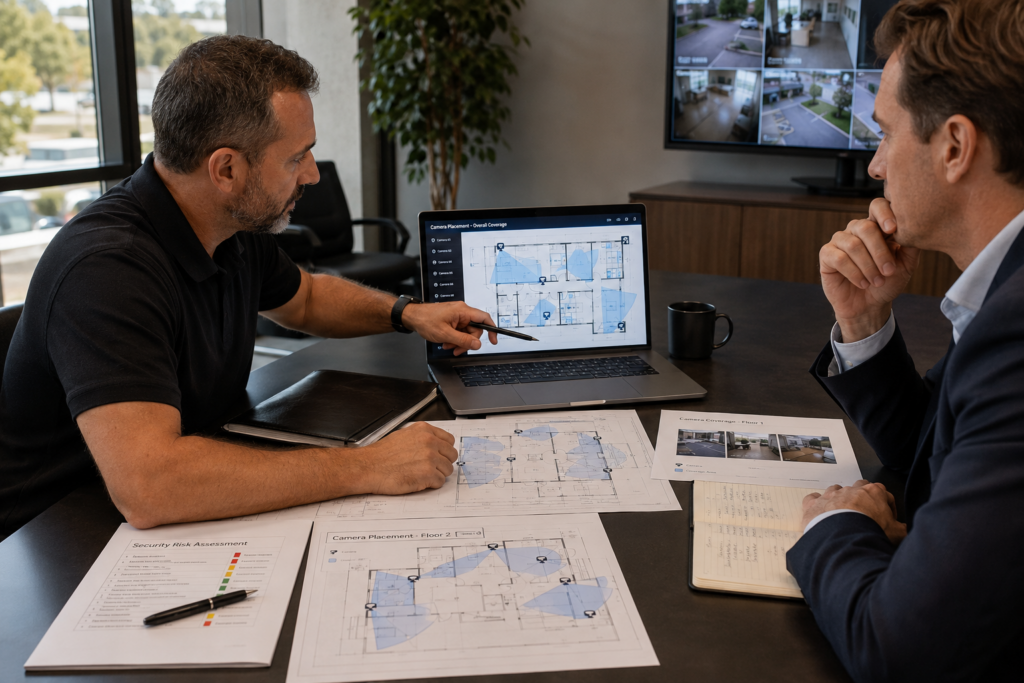
- Proper camera positioning for optimal coverage without blind spots
- Code-compliant wiring and electrical work
- Integration with existing security systems
- Warranty coverage and ongoing technical support
- Professional-grade equipment often unavailable to consumers
DIY installation works well for smaller residential systems with wireless cameras. Modern plug-and-play systems can be operational within hours, though they may lack the sophisticated features and reliability of professional-grade equipment.
For commercial properties, professional installation is typically required to meet insurance requirements, local building codes, and ensure the system provides legally admissible evidence.
Choosing the Right CCTV Installer
When selecting a professional installer, verify they have:
- Proper licensing for low-voltage electrical work in your area
- Experience with your specific property type (residential, retail, industrial)
- Certifications from major manufacturers
- Insurance coverage for installation work
- Local references and established business presence

CCTV Integration with Modern Security Systems
In 2026, CCTV systems rarely operate in isolation. Integration capabilities enhance security effectiveness and operational efficiency.
Access control integration allows cameras to automatically record when doors are accessed, creating a complete audit trail. Facial recognition can trigger door unlocks for authorized personnel while alerting security to unknown individuals.
Intrusion alarm integration ensures cameras immediately focus on alarm zones and begin recording at higher frame rates. This provides crucial evidence while reducing false alarm responses.
Fire safety integration uses thermal cameras to detect temperature anomalies and smoke, providing early fire detection that supplements traditional smoke detectors.
Smart building integration connects CCTV with lighting, HVAC, and facility management systems. Cameras can trigger lights in response to motion, optimize energy usage based on occupancy, and provide data for space utilization analysis.
Legal Considerations and Privacy Compliance for CCTV
Installing CCTV systems requires understanding legal requirements and privacy considerations that vary by location and property type.
In residential settings, cameras cannot monitor neighboring properties, public sidewalks, or areas where people have reasonable expectations of privacy. Audio recording often has stricter requirements than video surveillance.
Commercial installations must comply with workplace monitoring laws, which typically require employee notification about surveillance areas. Retail environments have specific requirements for monitoring cash handling areas while protecting customer privacy.
Data protection regulations like GDPR (in some jurisdictions) and state privacy laws affect how long video can be stored, who can access it, and how it must be protected from unauthorized access.
Legal Compliance Note: Always consult with legal counsel when installing CCTV systems in commercial environments. Proper signage, employee notifications, and data handling procedures are essential for legal compliance and avoiding liability issues.
Maintenance and Troubleshooting Your CCTV System
Proper maintenance ensures your CCTV system provides reliable security coverage and maximizes equipment lifespan.
Regular maintenance tasks include:
- Monthly camera cleaning to prevent image degradation
- Quarterly system health checks including hard drive status
- Annual professional inspections of connections and mounting hardware
- Firmware updates to maintain security and add new features
- Backup system testing to ensure recordings are recoverable
Common troubleshooting issues include network connectivity problems, storage capacity limitations, and camera positioning that becomes ineffective due to landscaping or structural changes.
Professional maintenance contracts typically cost 10-15% of the original system investment annually but provide peace of mind and often include emergency support, replacement parts, and system upgrades.
Future-Proofing Your CCTV Investment
Technology continues advancing rapidly, making future-proofing considerations essential for any CCTV investment in 2026.
Choose systems with upgrade paths that allow adding cameras, increasing storage, and incorporating new features without complete replacement. IP-based systems typically offer more flexibility than analog systems for future expansion.
Cloud compatibility ensures your system can adapt to changing storage and remote access requirements. Hybrid systems that can record locally and in the cloud provide maximum flexibility.
When selecting a CCTV system, the key is balancing current needs with future requirements while working with experienced professionals who understand both technology trends and local security challenges. A properly designed system should provide reliable security for 7-10 years while allowing incremental upgrades as technology advances.
Frequently Asked Questions About CCTV Systems
How long do CCTV cameras typically last?
Quality CCTV cameras typically last 5-10 years with proper maintenance. Outdoor cameras may have shorter lifespans due to weather exposure, while indoor cameras often exceed 10 years. Regular cleaning and firmware updates help maximize camera lifespan.
Can I view my CCTV cameras on my smartphone?
Yes, most modern CCTV systems in 2026 include smartphone apps for remote viewing. IP cameras and network video recorders typically offer the most seamless mobile access, allowing you to view live footage, receive alerts, and control camera functions from anywhere with internet access.
How much storage do I need for CCTV recordings?
Storage requirements depend on camera count, resolution, frame rate, and retention period. A typical calculation: one 1080p camera recording 24/7 uses approximately 1-2TB per month. Most systems use motion-triggered recording to reduce storage needs significantly.
Do CCTV systems work during power outages?
CCTV systems require backup power to function during outages. Options include uninterruptible power supplies (UPS) for short outages, generators for extended outages, or battery-powered wireless cameras. Professional installations often include appropriate backup power solutions.
What’s the difference between DVR and NVR recording systems?
DVR (Digital Video Recorder) systems work with analog cameras and process video at the recorder. NVR (Network Video Recorder) systems work with IP cameras that process video at the camera before transmission. NVRs typically offer higher resolution, easier installation, and more advanced features.